Monday, October 22, 2012

Week 4 Check-In

It’s hard to believe but Ive started my fourth week of training in Namaacha! Time is an interesting phenomena here… the days feel eternally long, but the weeks seem to disappear with the blink of an eye.  I apologize that I haven’t been in regular communication with everyone as I wanted to be – that will change once I’m sworn in and move to my 2-year site because I’ll have the time and (marginally) more money to invest in luxuries like internet.  As I’ve quickly learned, the primary philosophy of a Peace Corps volunteer quickly becomes “Work with what is available.” Given that there’s one computer in all of Namaacha with internet, I’ve generally decided to unplug myself from the outside world, give or take the few facebook posts to let Mom and Pop know I’m alive ;)

So! Let me begin first with describing my life here.

I have been warmly welcomed into the family of Cremilda and Ernesto Machava and their two kids, Elias and Marina. I feel so lucky to have been placed with this family as they have already left a great impression on me and have helped form some of my first ideas and observations about Mozambique. My “mae” (mother) Cremilda definitely wears the pants in this family, always cajoling, encouraging, or demanding something or another. In addition to being a mother and wife (the primary roles of women here), Mae is also a school teacher at a local Catholic primary school. However, because Mae isn’t home all day to take care of the household chores, she gets up at 4:30/5am everyday to clean the house and kitchen, cook breakfast, prep lunch, boil water for drinking and showers, and sometimes even do laundry or go to the market. I swear, Mae gets done more in the two hours before work than I do all day. My Pai (father) on the other hand (annoyingly) never lifts a finger at home because as is custom here, his primary duties take root in his success as a breadwinner. As a local merchant, Pai commutes between Namaacha and Maputo multiple times per week, driving a car so beat up that I swear to god its held together by duct tape. He’s often only home a few days a week, but whether that’s because of his work or because he has a second wife (aka, “casa dois,” or “house #2” as it’s called here), I haven’t quite figured out and haven’t had the guts to ask.

Ultimately though, as interesting as my Mae and Pai´s relationship is, if it weren’t for Elias and Marina, I would not be having nearly as much fun or feel so connected to this place already. Elias is ten – that amazing age where a giggle is ready to burst out of his little body any time his pale American sister says something wrong in Portuguese or makes faces at him. If I can make Elias laugh, my day becomes instantly better. Also, I gave Elias a soccer ball the first week I arrived in Namaacha and he hasn’t stopped playing/kicking the ball against the house since ( I’m sure he parents are thrilled…and I haven’t even broken out the fart putty yet! :)).  Marina, my host-sister, is also a real joy to be around. Already at 14 years, she’s stunningly beautiful with big beautiful brown eyes and long gazelle-like legs. The best part? I don’t think she’s realized her beauty yet, and I don’t think her mother has pointed it out to her either (some things, like a mothers desire for her child to remain innocent as long as possible, really do seem universal!).  Also, I enjoyed one of my best, most articulate conversations in Portuguese with Marina last week, talking about our dreams, life goals, and futures. Turns out, Marina loves biology and physics and dreams of going to university. Already though, even at fourteen, she’s worried that she won’t be able to go because of how expensive it is. It´s interesting to put it in this additional perspective: Marina is only two years younger than her mom was when she gave birth to Marina. The weight of the world (and history) seems to already be pressing on this girl’s promise and potential…But for now, I´m keeping content dropping in basic gender equality conversation topics while we do chores together and hope that something sparks Marina´s interest. Already, since Marina LOVES the hip-hop artist Beyonce, we´ve bonded over her song "Girls Run the World". (For those behind on their pop culture knowledge, youºll find the link here: http://www.youtube.com/watch?v=VBmMU_iwe6U)

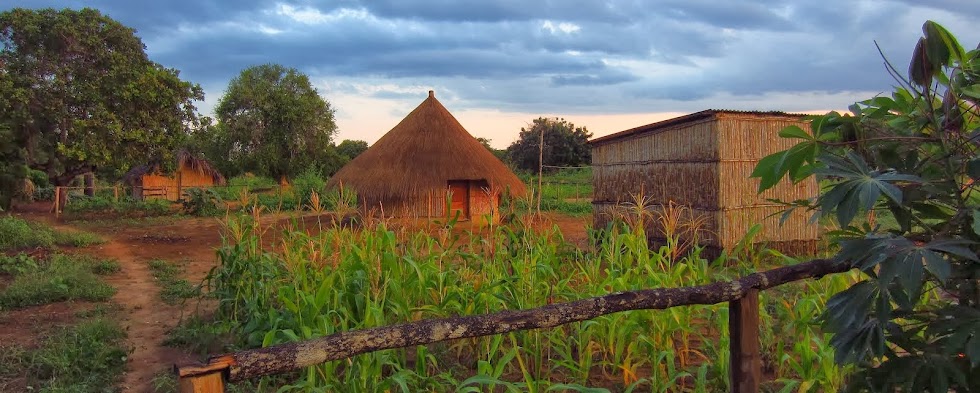
In any case, the five of us share a little 3-room cement block house located 4 blocks off the main road that goes through town. I have been given my own room at the family’s insistence while all four of them share a tiny bedroom. The kitchen is small but versatile, acting simultaneously as the living room, office space, and entertainment room.  An old, staticy T.V. is the room’s centerpiece, and it’s always blaring some Brazilian soap opera or top 40 music video channel. Privacy is a luxury here, and I have been given as much as can be afforded, but even then, I’ve only had about 20 total minutes of alone time in the last three weeks. I’ve gotten used to it though, and I even look forward to coming home every day to banter and laugh with the family over mealtimes. 

As my favorite thinker, Albert Camus, once wrote in The Stranger, “one can truly get used to anything.”  I’ve truly been amazed at how quickly I’ve gotten used to living a completely different life.  All the hesitancies and anxieties about pit latrines, bucket baths, and no running water are things that turned out to be complete non-issues. Amazingly enough,
things that you don’t have you generally realize you don’t need. As it is, I’m living on barely $3 per day. Really. And that’s still more than what local Mozambicans live on. As a sidenote, I have found a soul mate in Mozambican bathing culture! My host-mom made it very clear to me that I needed to bath 2-3 times per day while I’m here. So twice a day, I diligently scoop some water from our water barrel into a basin, pour in some hot water from the stove, and shuffle outside to the bathing hut in my colorful capulana. Also, for more perspective on my daily life, I do my laundry by hand in a bucket, sometimes with a rock. I look forward to the slice of American cheese that I get for breakfast every morning – “plastic” cheese that I would have scoffed at that in the U.S.  I even helped kill, pluck, and gut a chicken last week. Wouldn’t have thought I’d do that in a million years.

Now, in regards to being an official Peace Corps Trainee (PCT), the last three weeks and the next seven reflect an intensive introduction to not only Peace Corps ideology (addressing everything from teaching pedagogy to grassroots/community development methodologies), but also immersion into language.  My training in Portuguese has thus far been an intense, physical immersion into the language. Language classes are often 8 hours a day and forbid the use of ANY English. Moreover, we are all working with local speakers in groups of 4-5 people so we are individually held accountable to our learning.  The Peace Corps views language acquisition as the primary way of keeping people safe during service – the better you can communicate in your host-community and host-country overall, the less likely you´ll will be taken advantage of or put in vulnerable situations. Hence, the emphasis on language-learning is paramount to serving as a volunteer.  When we’re not in language classes, all 67 of us Peace Corps Trainees (PCTs) attend group training sessions about safety and security, health, and various other important skills like permagardening. And, when we’re not in training sessions we’re all at Javiers, a local bar, drinking Manica beer and exchanging laughs and stories. Overall,  I am learning so much and honestly loving every minute of it!!

That’s all I have time for now, but I hope to keep y’all updated more regularly.  Just wanted everyone to know that I am alive, happy, and loving what I’m doing!

Friday, September 28, 2012

Mozambique, ready or not, here I come!

My eyelids feel so heavy. Droooooop. Drooop.  No!! Okay, I’ll rally for this - this first post of my first few days as a Peace Corps Trainee. I’m sitting here in the lounge of Hotel Cardoso - perhaps the most luxurious setup in all of Maputo except for the Presidents mansion a few blogs down - charging my laptop and massaging my vaccinated deltoids to the jams of Kenny G (of all things to make it here through globalization, whyyyy that?!?).  The warm wood and rich marble threaten to cradle me in an epic faceplank.

Flying into Johannesburg (aka, Joburg)
In any case, I’m just wrapping up my second day here in Moz, exhausted, sweaty, and content. After flying to Philly for a blitzkrieg afternoon of orientation, me and 55 of my newest friends hopped on a bus at 0200 EST to NYC and flew out of JFK to Johannesburg – a 15 hour trek that was rewarded by at least another two hours of travel before we reached our final destination – Maputo! From the time we left the door of our hotel in Philly to our arrival at the hotel in Maputo, we’d been traveling for approximately 28 hours.

Dropping through the brownish haze of the muggy spring day (yes, it’s spring here, brought to you by the southern hemisphere, ha!), our first glance of Moz was one of scraggly brown hills rolling into the capital’s towering skyscrapers and down toward the choppy surf of the Indian Ocean. Shanty towns with tin roofs and palm trees juxtaposition the assortment of various palacial homes some distance away - a division that not only made the wealth gap here visibly apparent, but also provided a discreet warning to any do-gooder Peace Corps volunteer interested in “changing the world” in their two years of service...  there is indeed much work to be done. I can only hope that as volunteers we do no harm.


Flying into Maputo!

After disembarking the plane and each collecting our two 50lbs bags, we made our way through customs and into the hands of our PC Mozambique handlers. Chucking our bags into the back of a truck and barred trailer, we all piled into the jeeps and rolled out, our motorcade sweeping into the depths of Maputo traffic. “Umm, where are the road lines…?” I heard one PCV comment. “And uhh, we’re driving on the left??” These were the first of many interjections uttered with incredulous half-laughs, followed by winces every time it seemed that our driver took aim directly at the pedestrians walking or crossing the sidewalkless road.  Like I love to tell people, if you ever find yourself in a place such as Maputo, or Harare, or anywhere without a maintained infrastructure, there’s one main rule to surviving the city as a pedestrian: walk with old women!  They always know how to get across, whether its timing her entrance and maneuvers through traffic, or publicly shaming cars that don’t slow down and thus bending whole lanes to her will. At street crossing, grandmas reign.


Getting picked up in Maputo by the PC Jeep!
The life possessions of 55 people for the next two years...
So, as I was crossing my finders and mentally sending all the “near-misses” in Maputo guardian grannies, I was also working to absorb all the sights and sounds of this new city that I will learn to call one of my home-bases over the next two years. I have to admit, I didn’t think downtown Maputo was that beautiful. But, it was rich with purpose. Street vendors, taxi drivers, scrappy children, and business men in suits side-by-side in the daily ritual of commuting. In a moment, my thoughts flashed back to Harare, to Amman and Cairo, to Belgrade and Sarajevo – all places I remember being vivid, energetic, alive.  “Ahhhh! How I’ve missed this rhythm!”   I thought smiling to myself, suddenly remembering that this seeming “chaos” only appears so disorderly to me, the outsider. To everyone else, this is the rhythm of living in Maputo. And it will soon hopefully become a part of mine.

The evolution from outsider to insider status will begin tomorrow and will continue over the next few months in my PCV training program. After hours and hours of meetings regarding safety and security policies along with other logistical information, my Peace Corps group, Moz 19, is off to our training village called Namaacha (pron. “na-maa-sha”). Namaacha is about a 90-minute drive from Maputo, and is located on Mozambique’s border with Swaziland.  Perhaps the biggest, most exciting event occurring tomorrow will be our placement with our host families. I have recently discovered information about who my host-parents and siblings are, however, I will save those stories for next time :) I will say though that I cannot wait to give them their host family gifts!!

Alrighty, time to turn in for tonight.  But I’ll post more as soon as I have more adventures to relate! Until then, take care, lead good lives, and I’ll talk to you all very soon. 


Livin' the Peace Corps lifel haha. Don't worry, they're just buttering us up so we'll take on some really tough tasks!

View from the back patio. Look at that beach! 

Saturday, June 9, 2012

"Aren't we human too?"

Today, enjoying the idleness of my summer slothhood, I was surfing through the daytime programming of news networks - something that as a college student who spent the majority of time dissecting assigned readings for class, that I rarely got to indulge myself with. Not that my colleagues and I had any interest parking ourselves in front of some biased news guru who was essentially a talk-show host that at best toted a fancier vocabulary and at worst threw around hyper-generalizations about, well, almost everything. No thank you. Generally speaking, at the very least Willamette students grabbed the headlines of the New York Times everyday, and we'd often find ourselves gossiping over hot lattes and Bistro cookies what was going on in the world (along, of course, with that Willamette bubble "what so-and-so-did-at-that-party" chit chat, etc)

That being said, it's amazing to me what news slips through the cracks on a regular basis. A prime example? Syria.

So what is going on with Syria anyways?  Despite knowing more about Egypt and Jordan than Syria, I'll try to sum it up as well as I can. It all started March 18, 2011 during the Arab Spring when a group of school children were arrested and reportedly tortured after writing on a wall the well-known slogan of the popular uprising in Tunisia and Egypt: "The people want the downfall of the regime." Peaceful protests and demonstrations of dissent erupted in the town of Deraa, but strict repression from government security forces soon followed. With the killings of protesters, Syrians responded with anti-government protests in Baniyas, Homs, Hama, and the suburbs of Damascus. These districts however were also brutally suppressed, and by mid-May, the death toll reached 1,000.  Yet, protesters kept pouring into the streets demanding democratic reforms from President Bashar al-Assad, who offered little but token gestures and continued violence.

As months passed and protesters splintered into rebel forces and oppositional groups, clashes between government and resistance forces became more brutal. What had originated as anti-government, pro-democracy clashes escalated into a conflict involving systematic bloodbaths with hundreds of people, mostly civilians, being killed in their villages during army assaults on rebel "strongholds."

As of March 27, 2012 the U.N. estimated that over 9,000 civilians had been killed. And the numbers continue to rise.

The massacres of innocents, especially children, and the leveling of whole villages have been documented. When UN monitors entered the village of Qubair today, tweets from Paul Danahar of the BBC Middle East Bureau described the lingering stench of burning flesh, and upon inspection of the village found it completely deserted. Danahar further recounts seeing large pools of blood and scraps of brain and flesh hanging from the inside of homes, yet eerily the victims bodies were no where to be found, stating that "attempts to hide this atrocity are calculated and clear"


The evidence of this attempted "cover up" proves significant. Testimonies from witnesses from other villages regarding this most recent massacre suggest that it may not have been an attack directly mandated by the Assad government, but rather a nearby Alawite community, a minority sect of Shi'ah Islam from which much of the Syrian leadership is drawn. The assertion is an ominous one, especially when considering history. In ethnic conflicts such as the Rwandan genocide the Hutu majority slaughtered the Tutsi minority who had been imposed rulers since the period of Belgium colonization. Inherently, this minority-majority tension reflects an imbalance of power. When we review the demographics of the Syrian populace we see a similar tension: 74% Sunni, 16% Shi'ah (also, 10% small Christian sects). Essentially, just as in Rwanda where the ethnic minority held greater power than the ethnic majority, the Syrian religious minority -  or Shi'ah - holds the greatest influence over national affairs, at the oppression of the Sunni majority. Moreover, given the nature of Assad's oppressive rule, there's even more reason to worry about Syria's rapid disintegration into sectarian strife, especially with reports of privileged minority Alawites potentially enacting violence independently of the Assad government. If this proves to be true, the Assad's massaging of Syria into sectarian violence may echo ghosts of self-serving-power-mongers past. Similar to Milosevic's manipulation of national tensions to gain power through inciting a war between Bosnia's three prominent ethnic groups, Assad's fueling of religious war may cause his country to burn but leave him largely above the bloodshed and negate any previous threats to his power.  A simple divide and conquer strategy.

The one thing I keep coming back to grapple with however is the role of the international community throughout all this. My idealistic notions of justice crave for the U.N. to sweep in, seize Assad for crimes against humanity, and stop the violence before it becomes... (I don't want to say it...) genocidal. My intimate study of the aftermath of the Bosnian war and corresponding ethnic cleansing have made me realize how impossible it is to piece together peace after such deep schisms have been so horrifically carved - schisms that still, after twenty years, make grown men and women choke up when they attempt to recount their stories. In my opinion, both retributive and restorative forms of justice hold significant limitations...Retributive justice perpetuates violence by putting another name on it, and restorative justice, through tribunals for example, requires the cooperation of all parties involved and can offer only so much consolation. As I've learned from the Bosnian families that I stayed with last summer, really all that can heal the devastating wounds of war is time...and even then bitterness and hatred remains to taint and infiltrate the memories of the next generation...

So, I guess what I'm trying to say is that the international community should be pursuing a policy of preventative rather than palliative care toward such conflicts. But how can we, as nations interacting in an anarchic order, intervene ethically (aka. intervene without completely disregarding the rules of national sovereignty) when another nation is violating the Universal Declaration of Human Rights? Or even the Convention Against Genocide?

For answers I turn to Samantha Power, the Director of the Human Rights Initiative at the Kennedy School of Government at Harvard University, and author of numerous books and an amazing article titled, "Never Again: The World Most Unfulfilled Promise." Essentially, she argues that sovereignty (and self-interest) is so highly valued that nations - especially the United States - don't tend to intervene in the systematic oppression of a state's citizens at all. In fact, Power argues that irrespective of the political affiliations of U.S. Presidents, the major genocides of the post-war era have "yeilded virtually no American action and few stern words" for three main reasons:

  1. Preservation - That while leaving ethnic conflict alone threatens no vital American interests, suppressing it can threaten the lives of American soldiers.
  2. Isolationism - U.S. leaders claim that Americans want them to fulfill the American dream of equality and freedom at home before looking abroad
  3. Multi-national bodies such as the U.N. never received either the commitment of the United States or the teeth for enforcement that the Universal Human Rights Declaration and the Convention on Genocide needed to become "law" in any meaningful sense.

Thus, when considering the lukewarm U.S. and international response to Syria's massacres it is understandable that the conflict is being categorized as a "civil war" or "sectarian conflict" - if it were labeled as anything else, we would be obligated to act.  But for now, we continue to pursue only diplomatic alternatives.

Just to back off of my frustration with the international community for a moment however, I must acknowledge that the U.N. did introduce a military intervention resolution against Assad. However, Russia proceeded to veto the UN Resolution sponsoring such intervention and China, holding significant economic interest in Syria backed Assad. This transforms this issue of sovereignty into a much greater challenge. And so, the struggle for Syria in many ways does not so much become about humanitarian intervention, but rather a game of power politics.  


The question remains: Will we, as members of the international community, continue to turn away from the killings and violence? Or, can we negotiate with other nations to place humanitarian concerns at the forefront of the international scene?

I can only hope for the latter.

To conclude, I return to today's tweets from the BBC's Paul Danahar, who, while navigating the district of Hama in the UN vehicle, is stopped at a checkpoint.

"And we are through again after a lecture from a soldier," Danahar recounts. "[The soldier demanded] "Why don't you care about the terrorists killing us, aren't we human too?"

I can't help but wonder how Danahar answered such a question.


Sunday, April 15, 2012

Don't kid yourself, kid.

So. I can finally see the light at the end of the tunnel. May 1st is only two weeks away. My thesis will be done and I'll be able to finally breathe. This anxiety that sits like an alien waiting to burst out of my chest will be over. Khalas! Voila!

For all the stress though, I shouldn't kid myself by pretending to be apathetic. Faking apathy is perhaps a coping mechanism for those nights after a cold crew practice in the rain where all I want to do is curl up into a ball after a hot shower and go to sleep. Apathy is what I pretend when I push aside thesis to spend a whole weekend at a regatta. And in a way, apathy toward my thesis is a way to help me stay grounded in what I care about most: my friends, crew, and enjoying the people I love before they are whisked away from me.

But ultimately, I can't kid myself for too long. I care more about this thesis than I've let on, even to myself. I care about it so much that it keeps me awake sometimes thinking about what it all means. I tear up when I watch all the videos and testimonial of women getting the shit kicked out of them by military police, getting striped, club, spat on, and humiliated with state issued "virginity tests." Yet, in Tahrir for over a year, women talk about democracy and womanhood in the face of incredible violence and repression. Women have died protesting, while I sit at my desk writing about it.


If that's not humbling, I don't know what is. I owe it to more than just myself to turn in a good paper. I owe it to the women that have made themselves the front-line of social change worldwide to help their true voices be heard and their stories remembered, even if its only heard by a few students at a really privileged liberal arts school.


Tuesday, March 13, 2012

Treatise to Myself

I recently was going through some boxes of school stuff over winter break and came across a pleasant surprise: a dogeared piece of notebook paper, haphazardly slipped between copies of rough draft essays and class notes. The minute I saw the heading, and scrawled handwriting, a small smile broke, and I began to read this letter to myself that I had forgotten.

The Bistro!
I wrote this list to myself a year ago in the Bistro in the midst of a huge life transition. I found myself stewing and stressing, feeling incredibly overwhelmed, miserable, and frustrated with being yanked back into the Willamette bubble. I was unsure about the future, missing the past, and apathetic about the present. Then, in a sweeping impulse, I decided that I had had enough. It was time to make a change. I call it my personal treatise, and I return to it now a year later, I think a healthier, wiser, happier human being. Here it goes:


Treatise to Myself

  1. I can do anything
  2. I can choose what is best for me
  3. I can recognize my limitations
  4. I can recognize my needs, and demand that I respect them
  5. I have the right to be happy
  6. I have the right to express myself
  7. I have an obligation to do what feels right and just, rather than what is asked or expected 
  8. I will always follow my gut/instinct
  9. I will always treat people how I wish to be treated
  10. I will not be burdened by the ambiguity of the future
  11. I will act foremost out of love
  12. I will be patient with myself and with others
  13. I will always try to see things from other points of view
  14. I will rarely condone absolutism or "all or nothing" ways of thinking
  15. I will surround myself with people that I love, love me, or challenge me to be my best
  16. I will remind myself that there is rarely a "right" way, but rather different paths to the same thing
  17. I will write candidly and allow my views and voice to explore and change
  18. I will relish the contradictions in life, and understand that such contradictions aren't necessarily mutually exclusive
  19. I will serve others, but also myself
  20. I will not fear what I do not understand
  21. I will live a life of adventure without regret!


Thursday, March 8, 2012

ELATION

Just received an email this morning from my Peace Corps handler, Joseph, and I have some exciting news! I've been officially invited to serve as a secondary school teacher in Africa and will depart in late September 2012!!!!!!!

I was starting to think that this dream would be stuck in the processing stage forever, although my application process took only 8 months compared to the standard 9-12 months. As it stands now, I only have to wait a maximum of ten more days to open my informational packet that will tell me of my specific country assignment.

This feels so unreal. I'm absolutely ELATED to be going to "Africa," and while that atrocious hyper-generalization will forever annoy me (considering that there's no way to conceptualize the diversity of an entire continent, let alone countries, peoples, and cultures lying within), I think back to my time in Zimbabwe and I'm THRILLED that I'll be able to live another piece of the African experience. I'm assuming I'll probably go to southern or eastern Africa since I don't know a lick of French (which would send me to Western Africa...boo, colonialism), but WHO KNOWS?? I could theoretically end up in any one of these 27 host-countries:


I guess you could say that I have a perverse attraction to not knowing what's going to happen next.

Which reminds me - I have absolutely NO PLANS for the summer. I've been planning for a July departure date, which would have allowed me six leisurely weeks before I jumped on a plane, but now I have four whole months of summer!! Joseph encouraged me in his email to continue pursuing teaching opportunities. He also advised that once I discover where I've been placed, to begin studying the local language. 

You thinking what I'm thinking?! How about another summer in Portland, taking Swahili classes at PSU and rowing everyday in the beautiful Oregon summer! Or even going backpacking on weekends at Hood and Rainier, and maybe even taking a mountaineering course???? Maybe get a job?? The possibilities are endless! 

Let me tell you though, it feels good that I won't have to say so many incredibly hard goodbyes and then rush off into the sunset immediately after graduation. I'll have some time to process the last four years and prepare myself for the next two of service abroad. In the big scheme of things a departure date two months later than expected will not be a big deal. In fact, I think is the better outcome.

I'm just thankful I had the patience to sit on my hands long enough for things to work themselves out :)

Now, onwards and upwards!! 

Hiking Mt. Inyangani - Nyanga, Zimbabwe (2010)


Tuesday, March 6, 2012

Chocolate & Girl-talk

Singledom has once again alighted upon both women of the freezing Inferno.  The event was observed and/or celebrated accordingly tonight with respectable amounts of baking, chocolate, and girl talk.  I'm talking freshly baked lava cakes people. And lots of hilarious inside-joke-quotes-for-the-quote-wall type of night. I'm the happiest I've been for a while.

Despite my overarching optimism in life, experience has bestowed upon me a sizable streak of realism when it comes to relationships. After one of the most candid talks we've had in months (how ironic), Peter and I called it quits. I can't help but feel overwhelming relief - like all the anxieties and imbalances that had latched themselves to me over the last seven months, fell away and left me whole again.

Yes, I shed a few tears. Yes, I'm definitely going to miss the better parts of our relationship. The fun times we did share really made up for the not-so-great ones, and kept me hoping that things would get better. But ultimately, we both couldn't make each other an important enough priority in the scheme of being second semester seniors - theses, opposing crew workout schedules, jobs, rehearsals, etc. Life in general left us out of step with each other. Things that we always talked about doing never happened. Times that we could have hung out together were used to catch up on much needed alone time. And frankly, with both of our post-grad departures looming on the horizon, neither of us could see the light at the end of the tunnel - a reason/sliver of hope that could have helped us continue justifying our attempted maneuvers within the difficult confines of our given situation. 

There were other issues too of course, but they'll remain unmentioned.

It does make me wonder though. I know I want to be in a loving relationship with a partner one day (thanks to the awesome example of my parents)...but will there ever be someone out there that will fit in with the high-flying sights of my own individual ambitions? Will I have to match myself up with someone exactly like me? With the same type of career interests? Or someone with a career flexible enough that they can follow me across the world on my various adventures/foreign assignments?  I know it's too early to be actually worried about this kind of thing, but it is interesting to think about. Funnily enough, the Peace Corps just sent me another email asking if "there were any updates in my romantic involvement?" which essentially means "are you in a relationship that could potentially compromise our investment in you as a volunteer?" 

Apparently, companionship - and our human desire, or should I say craving for it - is not something to just ignore or dismiss as a luxury. It is a necessity. 

And so, as I find myself once again a single lady I'm surrounding myself with my wonderful wing-women who continue to stick by my side through thick and thin. It's their energy that will power me, encourage, and motivate me through the next seven weeks of insanity until graduation. Pretty soon we'll be all scattered to the winds. My heart aches at the thought, but for now, the chocolate and girl-talk meanders freely as we cluster ourselves around the heater and laugh until our bodies hurt. Now that is love.